
Deconstruct Project

Over the past few years, there has been a significant increase in identity-based hatred, discrimination, and intolerance, often leading to violence. These trends transcend borders and are exacerbated by the widespread dissemination of hate through various media channels, both online and in print. Antisemitism, in particular, is rising at a faster pace compared to other forms of hatred. One of the many manifestations of antisemitism is Holocaust distortion. Recent years have witnessed a shocking surge in attempts within international public and political discourse to downplay the impact of the Holocaust and minimise the crimes committed by the Nazi regime and its collaborators. Holocaust distortion is not confined to national boundaries, nor is it limited to a single language. International cooperation and developing media literacy skills are crucial in combating this form of hatred. Through this program, a transnational consortium of organisations dedicated to countering hate and discrimination will work together to combat racism and intolerance through research, education, and public programming, specifically addressing antisemitism and Holocaust distortion. The program will deliver research findings, online educational resources, and an innovative public awareness campaign to engage educators, students, decision- makers, and policymakers, equipping them with the necessary resources and training to combat antisemitism and Holocaust distortion, while also fostering the development of media literacy skills. The learning resources will initially be developed in English and then localised by the partners for use in different local languages and contexts. The consortium aims to establish a continuous cycle of education and engagement rooted in research and evaluation, empowering beneficiaries to progress from learning to understanding and creating virtual spaces where individuals can mobilise their collective and individual power to take action.


The consortium consists of five partners from four European countries. Four important geographies - Greece, Hungary, Portugal, and Italy - are brought together in this partnership. We also bring together different sectors: universities, with different department foci (History, Pedagogy, and Translation), NGO and a Research Institute to demonstrate how these sectors can work together. Besides the usual cooperation between partners, this project emphasises sharing knowledge and experience.
Activities
In the present project, we developed multimedia activities around the topics of Holocaust denial, distortion and antisemitism/discrimination and media literacy using some of the earlier localised ‘#ProtectTheFacts’ campaign materials and/or the translated IHRA Toolkit materials alongside video testimonies of survivors and witnesses and other relevant sources. The total number of developed educational modules is 20 – 4 modules in Greek, 4 modules in Hungarian, 4 modules in Italian, 4 modules in Portuguese and 4 modules in English.
The general objective was to develop materials that address some or all of the following topics:
● Holocaust denial
● Holocaust distortion
● Antisemitism/discrimination
● Media literacy

Click to access the activity:
Click to access the activity: Média és információ
Click to access the activity: Védd a tényeket
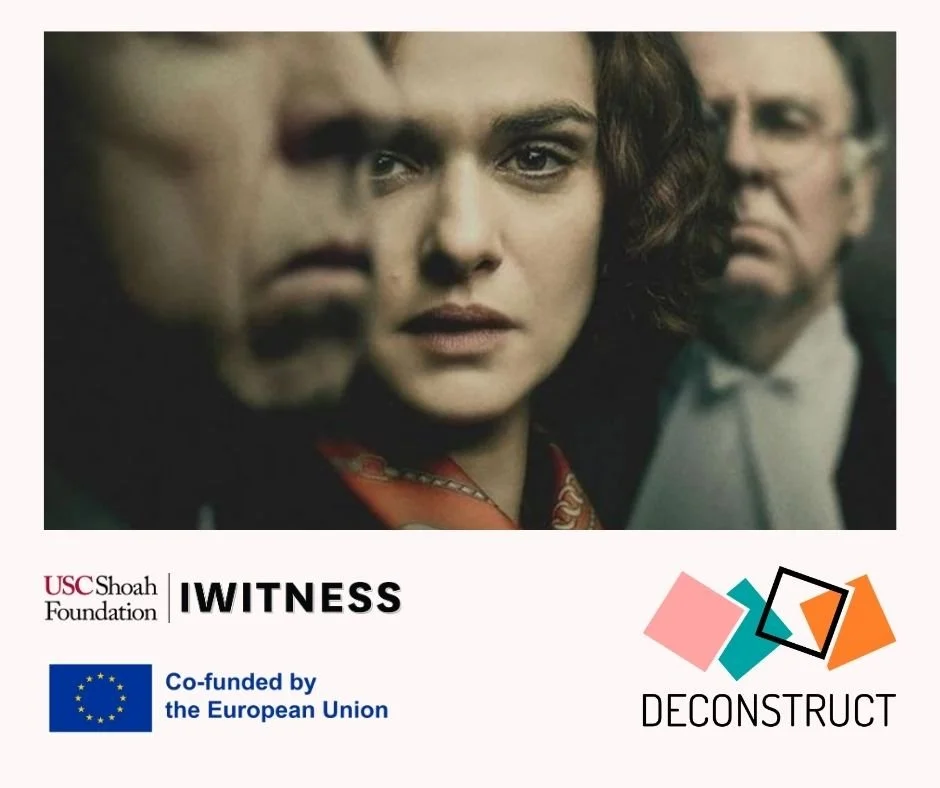
Click to access the activity:
The first module explores the topic of Holocaust distortion and Holocaust denial - phenomena that deny, question or distort facts and details of the crimes committed in the genocide during World War 2. The activity develops an understanding of the tragedy in the past and supports students in developing their critical thinking skills by analysing and interpreting various sources to become equipped to recognise and counter denial and distortion. They will also understand how denial and distortion pose danger to our societies and common values. The module uses clips from the testimonies of Lajos Cséri, Tibor Pásztor, and Tamás Érdi. It uses a Hungarian language asset from the ProtectTheFacts campaign assets (’Holocaust distortion fuels antisemitism’) and from among the IHRA ToolKit materials, the activity uses a clip from Professor Yehuda Bauer’s lecture.
In this module, students examine the flow of information and the role of media in our time. The activity aims to develop media awareness, to help students recognise the difference between facts and opinions, and to understand the impact of fake news and information distortion. Students reflect on how social media influences the spread of news and what methods can be used to identify and filter misleading information. The activity supports students in developing critical thinking skills and becoming conscious and responsible media consumers. The module uses clips from the testimonies of Tibor Pásztor, and Jeffrey Cohen and a Hungarian language asset from the ProtectTheFacts campaign.
This module addresses the theme of Holocaust denial and distortion. Students analyse and interpret a variety of sources: excerpts from survivors’ video testimonies as well as elements from awareness campaigns launched by the International Holocaust Remembrance Alliance, the United Nations, the European Commission, UNESCO, and the OSCE. They reflect on the phenomenon of denial and distortion, then collect words to build a word cloud. Using these words as prompts, they write a guided composition in which they record their thoughts, feelings, and opinions about how to confront Holocaust distortion, and what their individual responsibility in this effort might be. The module uses clips from the testimonies of Béla Varga and Péter Vermes and 6 Hungarian assets from the ProtectTheFacts campaign.
In this module students reflect on the relationship between historical evidence and opinion, the concept of reliable information, the limits of freedom of expression, and the importance of preserving survivors’ personal stories, based on the film Denial (American–British biographical drama, 2016 about American historian Deborah E. Lipstadt having to defend her case in court against a well-known British Holocaust denier.) The module uses clips from the testimony of Éva Beck.
Student Videoessay Projects
As part of the DECONSTRUCT project, a student video essay activity was implemented to engage young people in critically reflecting on and raising awareness about Holocaust distortion and the role of facts in shaping historical understanding. Through creating their own video campaign, students explored the relationship between knowledge, denial, and contemporary forms of misinformation. The objectives of this activity were to strengthen students’ critical thinking and media literacy skills; to deepen their and their peers’ understanding of Holocaust distortion and the importance of reliable sources; to encourage personal engagement with historical questions through creative expression, and to support students in articulating informed, evidence-based perspectives to foster agency.
Take a look at the student projects from: Greece — Hungary — Italy — Portugal